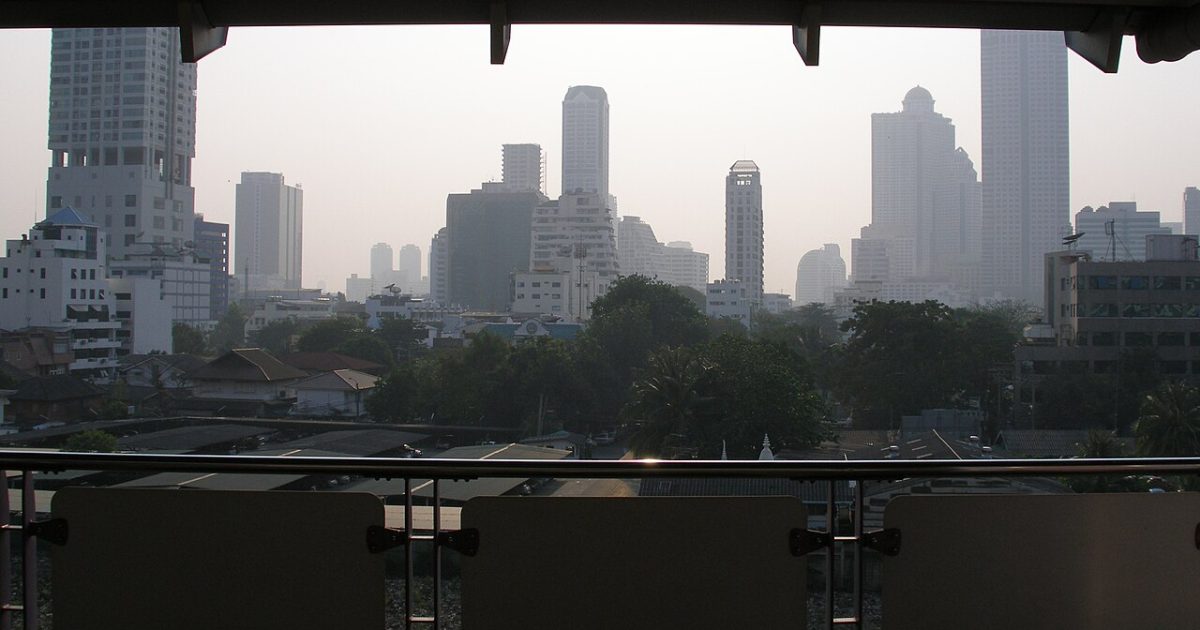
Thailand takes on more foreign English teachers than any other country in Southeast Asia, and it is the one market where a first-timer with a degree and a TEFL certificate can still land a legal, work-permitted job within a few weeks of arriving. This guide covers what the work actually pays, the visa and licence steps in the order you will meet them, and what your salary buys once you are living there.
Overview
The short version, before the detail:
| Typical monthly salary | 30,000–60,000 THB (≈ US$900–1,800) |
| Typical hourly rate | 350–700 THB (≈ US$11–21) |
| Degree required? | Yes — bachelor’s, any subject, for the work permit |
| TEFL required? | Effectively yes — 120 hours is the standard ask |
| Visa route | Non-Immigrant B → work permit → teacher licence or waiver |
| Cost of living | US$700–1,300/month for a comfortable life |
| Peak hiring | March–May, second wave September–October |
| Currency | Thai baht — ≈ 33 THB to US$1 |
Why teach in Thailand
Thailand’s appeal is not that it pays the most. China and the Gulf pay more, and so do the top international schools in Vietnam. Thailand’s appeal is that the barrier to entry is low, the country is genuinely pleasant to live in, and the teaching community is large enough that you are never the only foreigner working out how to renew a visa.

Three things make it different from its neighbours:
- Volume. Thousands of government schools, private bilingual schools and language centres hire foreign teachers every year. Even in a quiet month there is work.
- Legal clarity. The route — Non-Immigrant B visa, then work permit, then teacher licence — is well trodden. Schools that hire foreigners regularly know the paperwork.
- Position. Bangkok is a four-hour flight from most of Asia. Teachers use Thailand as a base and travel on the long school breaks.
The trade-off is salary compression at the entry level. A first job at a government school pays roughly what it paid a decade ago, while rent in Bangkok has not stood still. The teachers who do well financially are the ones who move up into bilingual or international schools within two or three years.
Salary: what the jobs actually pay
Most Thailand salary guides quote a range without saying where it came from. So rather than estimate, we read the pay field on every Thailand vacancy live on this board on 12 August 2026 — 80 listings across government schools, bilingual and international schools, kindergartens and language centres.
Two findings are worth pausing on.
The median sits at 44,000 THB, not 35,000. The “30–35k is normal for Thailand” figure that circulates online describes entry-level government school work specifically. Across the whole advertised market the middle is higher, because bilingual and international schools pull the upper half up hard.
One caveat we would rather state than hide: a good number of these listings advertise “up to” a figure, and we counted those at their ceiling. Real offers land below the ceiling more often than at it, so treat 44,000 as the middle of what is advertised rather than what is finally signed. The shape of the distribution is the useful part; the exact midpoint is not.
Here is how the monthly roles spread out:
| Under 30,000 THB | 8% of listings |
| 30,000 – 40,000 | 27% |
| 40,000 – 50,000 | 25% |
| 50,000 – 70,000 | 22% |
| Over 70,000 | 18% |
Nearly three in ten listings advertise no figure at all — 23 of the 80 said “competitive” or left the field blank. That is almost exactly the proportion we found in Vietnam. A missing number is rarely a bad sign; it usually means the school sets pay after the demo lesson and has room to move. Ask.
Where you land depends mostly on employer type:
- Government schools — 30,000–35,000 THB, large classes, a Thai co-teacher, and the longest holidays. The standard first job.
- Private and bilingual schools — 40,000–60,000 THB, smaller classes, more planning and reporting, often a licensed-teacher preference.
- International schools — 70,000 THB and well beyond, frequently with housing, flights and tuition for your own children. A recognised teaching qualification (PGCE, state licence) is usually non-negotiable.
- Language centres — hourly, 350–700 THB, evenings and weekends because that is when students are free. Flexible, but hours are not guaranteed.
One contract detail specific to Thailand: check whether the school pays you across the March–May break. Many government school contracts run ten or eleven months, and a headline “35,000 a month” is a different number over a year than it looks.
Requirements
To be hired legally you will generally need:
- A bachelor’s degree in any subject. This is a hard requirement for the work permit, not a school preference.
- A TEFL, TESOL or CELTA certificate, 120 hours or more. Not always demanded by law, but the practical floor for most employers.
- A clean criminal record check from your home country, and often a Thai one once you arrive.
- Original documents — degree certificate and transcript. Many schools want these notarised or legalised, so bring the originals rather than scans.
- A medical certificate from a Thai clinic, which is quick and inexpensive.
Non-native speakers are hired in Thailand, but usually need to show English proficiency — a TOEIC score is the most commonly requested evidence, and the threshold varies by employer and by what the licensing body asks for at the time. Check the current requirement with the school before paying for a test.
Teaching in a Thai school also requires a teacher licence from the Teachers’ Council of Thailand (Khurusapha). Most foreign teachers begin on a temporary waiver arranged by the school while they work toward the licence. Because the rules here have been revised several times, treat any figure you read online — including this page — as a starting point and confirm with your employer, who processes the application on your behalf.
Visa and work permit
The order matters, and getting it wrong costs weeks:
- Get a job offer first. The school issues the documents you need for the visa.
- Apply for a Non-Immigrant B visa at a Thai embassy or consulate, or through the official e-Visa portal. Entering as a tourist and converting in-country is possible but slower and not always permitted.
- The school applies for your work permit through the Department of Employment once you are in Thailand.
- Extend your stay at immigration, usually to one year, on the basis of the work permit.
- Teacher licence or waiver is processed in parallel by the school.
Official starting points, rather than second-hand summaries:
- Thai Ministry of Foreign Affairs — visa categories and requirements
- Thailand e-Visa official portal
- Ministry of Labour — work permit authority
- UK FCDO entry requirements for Thailand — kept current, useful even if you are not British
Two obligations that catch new arrivals: you must report your address every 90 days while on a long-stay extension, and you need a re-entry permit before leaving the country or your extension is cancelled at the border. Your school will usually remind you about the first and forget to mention the second.
Cost of living
A comfortable single-person life runs about US$700–1,300 a month outside the luxury bracket. Against a median advertised salary of 44,000 THB (≈US$1,330), that is a real but not enormous margin.
Overall costs are close to Vietnam’s. The difference is concentrated in Bangkok rent, which runs ahead of Hanoi and Ho Chi Minh City for an equivalent apartment — and it is why the savings maths in Thailand depends more on which city than on which school.
Rent is the variable that decides everything:
- Bangkok — a studio or one-bedroom on the BTS/MRT line runs roughly 10,000–20,000 THB. Move two stations out and the same apartment drops by a third.
- Chiang Mai — 6,000–12,000 THB for the equivalent, which is why so many teachers who want to save end up there.
- Provincial towns and Isaan — 3,000–7,000 THB is common, and a government school salary goes a long way.
- Phuket and Samui — tourist pricing on rent and groceries; salaries do not rise to match.
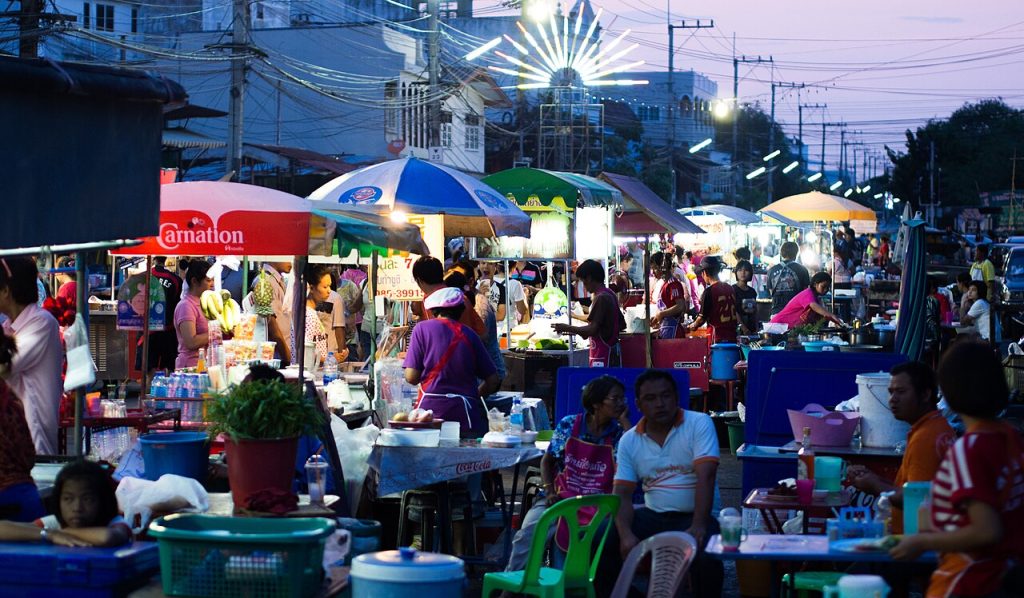
Eating at local restaurants and street stalls is the single largest saving available, and it is not a hardship. Air conditioning is the hidden cost — a hot-season electricity bill can double.
For current crowd-sourced figures see Numbeo’s Thailand cost-of-living index, and for the exchange rate used throughout this guide, the Bank of Thailand daily rates.
Best cities to teach in
- Bangkok — the deepest job market by a distance, the highest salaries, and the only place with a real concentration of international schools. Also the highest rent and the worst commute.
- Chiang Mai — the balance option. Lower pay than Bangkok, much lower costs, cooler weather for part of the year, and a large established expat community.
- Phuket, Pattaya, Samui — plenty of language-centre work aimed at tourism and hospitality staff. Living costs are high relative to salary.
- Khon Kaen, Udon Thani and the Isaan region — government school work, very low costs, few other foreigners. The strongest savings potential and the steepest cultural learning curve.
- Hua Hin and Rayong — smaller markets with a mix of bilingual schools and centres serving expat families.
The job market right now
Of the 80 Thailand vacancies live on this board in August 2026, the largest single group was kindergarten and primary roles, followed by secondary subject teaching in bilingual programmes. Language-centre work made up a smaller share than it did five years ago — a shift that tracks the growth of bilingual programmes inside mainstream schools.
Demand for teachers who can handle a subject in English — maths, science, social studies — is consistently stronger than demand for general conversation teachers, and it is paid better. If you have a subject background, say so prominently in your application; a surprising number of teachers bury it.
School types
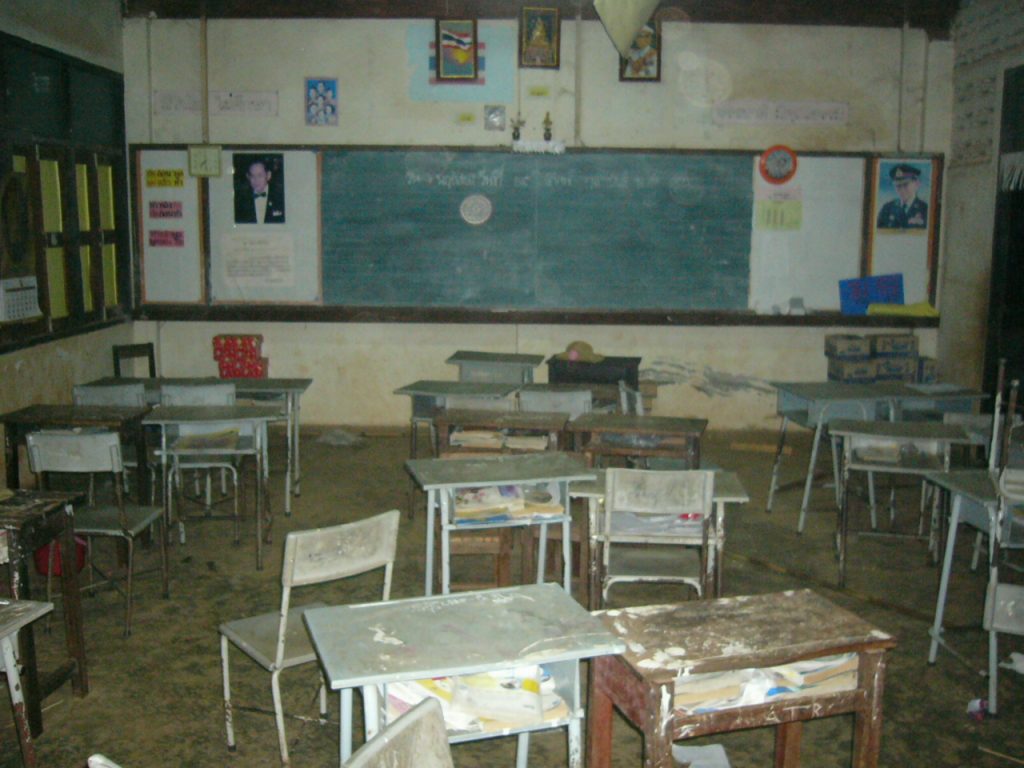
- Government schools — 40–50 students per class, a Thai co-teacher, light planning, long holidays. Often hired through an agency, which takes a cut of the school’s budget rather than your advertised salary.
- Private bilingual schools — smaller classes, a real curriculum, more accountability, and pay in the 40,000–60,000 band.
- International schools — British, American or IB curricula, taught mostly to Thai and expat children whose parents pay significant fees. Qualified teachers only, but the packages are in a different league.
- Language centres — after-school and weekend classes for all ages. Hourly pay, flexible, and the usual entry point for teachers already in the country.
- Universities and corporate training — fewer posts, often part-time, and the source of the highest hourly rates in the data above.
Benefits and perks
What actually appears in Thai teaching contracts, in rough order of how often:
- Work permit and visa costs paid by the school — near universal at legitimate employers, and a red flag when absent.
- Paid school holidays, or a subset of them. Read the contract length carefully.
- Health insurance, though the coverage level varies enormously.
- Free lunch on teaching days, standard in schools.
- Airport pickup and a few nights’ accommodation on arrival.
- Flight reimbursement or a completion bonus paid at the end of the contract, common at international schools and rare below that tier.
- Housing allowance, mostly at the international level.
Challenges to expect
The honest list, because the glossy version helps nobody:
- Class sizes in government schools are large, and classroom management is a skill you will acquire quickly whether you planned to or not.
- Paperwork resets. Visa runs, 90-day reports, re-entry permits and annual renewals are a permanent low-level administrative tax.
- Agency contracts vary in quality. Ask whether you are employed by the school or by an agency, and whether the salary quoted is before or after the agency’s cut.
- Career ceiling. Without a formal teaching qualification, there is a level above which you will not move. Teachers who intend to stay usually start a PGCE or equivalent by year three.
- The hot season. April in Bangkok is genuinely difficult if you have not lived in that climate before.
Hiring season
Thai schools run mid-May to March, in two semesters with a long break in April. That produces two hiring waves:
- March to May — the main one, for the new academic year. The widest choice and the most competition.
- September to October — the second semester wave, filling posts left by teachers who did not stay. Fewer roles, but less competition and often faster decisions.
International schools work to a different calendar, hiring from January for an August start, and they recruit much earlier than everyone else.
How to find a job
- Decide your tier honestly. With a degree and a TEFL you are looking at government schools and language centres. With a teaching licence you should be applying to bilingual and international schools and nothing else.
- Get documents ready before applying. Degree, transcript, criminal record check, passport scan. Schools move fast in season and the candidate with paperwork in hand wins.
- Expect a demo lesson. Almost every Thai school asks for one, in person or by video. Prepare a 20-minute lesson you can teach cold.
- Ask the three questions that reveal contract quality: Who employs me — the school or an agency? Am I paid through the April break? Who pays the work permit and licence fees?
- Apply to more than you think you need. Response rates are uneven, particularly outside the two peak windows.
Latest jobs in Thailand
Live vacancies from schools and centres hiring right now:
FAQ
Can I teach English in Thailand without a degree?
Not legally. The bachelor’s degree is required for the work permit, and it is not a requirement schools can waive. Roles advertised without one are either volunteer positions or informal work that leaves you without a permit — which puts you, not the school, at risk.
Do I need to be a native English speaker?
No. Non-native speakers teach across Thailand, though you should expect to prove proficiency, usually with a TOEIC score, and to face more competition for the higher-paying roles. Confirm the current threshold with the employer before booking a test.
How much can I realistically save each month?
On a 35,000 THB government school salary outside Bangkok, saving 8,000–12,000 THB a month is realistic if you live locally. On a 60,000 THB bilingual school salary in Chiang Mai, 25,000 and up is achievable. In central Bangkok on an entry salary, saving anything is hard.
Is it better to apply from home or after arriving?
From home for the main March–May wave, because you need the Non-Immigrant B visa arranged before you start. Applying from inside Thailand is common for language-centre work and mid-year vacancies, but plan for the extra visa steps it creates.
How long does the work permit take?
Once you are in Thailand with the right visa and complete documents, schools that hire foreigners regularly turn it around in a few weeks. Missing or un-legalised degree paperwork is the usual cause of delay, which is why bringing originals matters.
How does Thailand compare with Vietnam?
Vietnam pays more at the median — 45 million VND against 44,000 THB works out roughly US$1,720 versus US$1,330 — and living costs are lower, so the savings gap is wider. Thailand offers more entry-level positions, a more established route for first-time teachers, and, for most people, an easier landing. Our Vietnam guide covers that market with the same listing data.
Related guides
- Teaching English in Vietnam: The Complete 2026 Guide
- All current English teaching jobs in Thailand
- Schools and language centres hiring in Asia
About the numbers. Salary figures in the “what the jobs actually pay” section come from the advertised pay field of all 80 Thailand vacancies listed on Asia TEFL Job on 12 August 2026. Ranges were taken at their midpoint and “up to” figures at their ceiling; two listings with unusable pay data were excluded. Baht-to-dollar conversions use ≈33 THB to US$1 (Bank of Thailand). Visa and work permit steps are summarised from the Thai Ministry of Foreign Affairs and Ministry of Labour; requirements change, so confirm current rules with your employer or the relevant authority before acting on them.