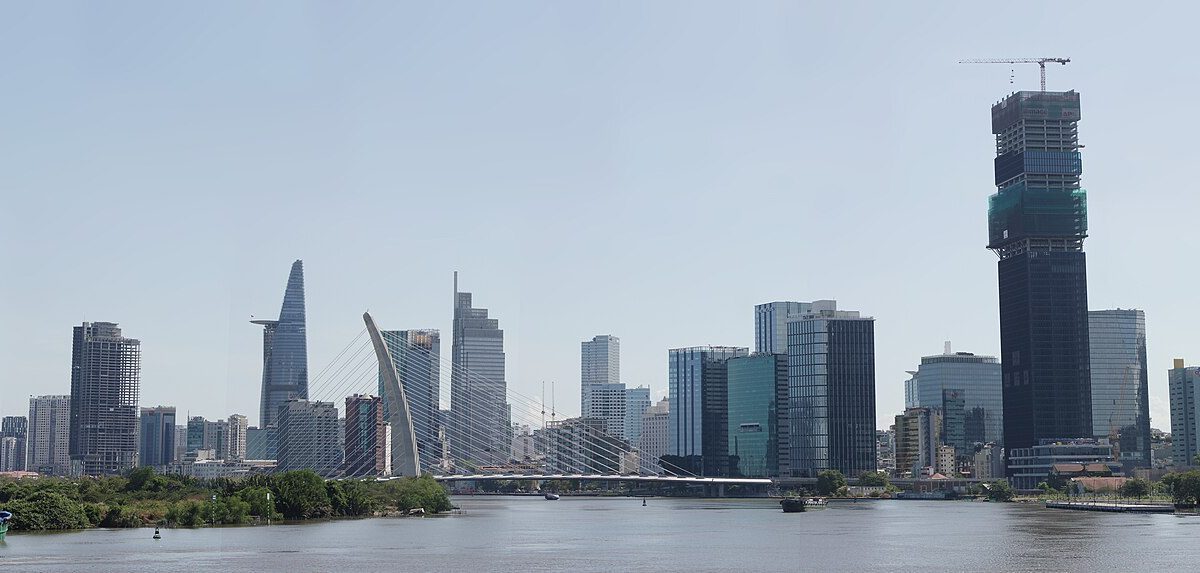
Vietnam has quietly become one of the best-paying places in Asia to teach English relative to what it costs to live there. This guide walks through what the job actually pays, what the law now requires after the 2025 work-permit reform, and what your money buys once you land — using salary figures pulled from the roles live on our own board this month.
Table of Contents
Overview
Vietnam runs on English. A generation of parents treats it as the single most valuable thing their child can learn, the government has pushed English into the primary curriculum, and a fast-growing economy full of foreign investment keeps the demand rolling. The result is a teaching market that hires steadily rather than in bursts — private language centres, bilingual and international schools, kindergartens, universities and corporate training providers all compete for qualified foreign teachers.
For a foreign teacher the appeal is straightforward arithmetic. A full-time salary sits comfortably above what a decent life in Hanoi or Ho Chi Minh City actually costs, which means saving money is normal rather than exceptional. That gap — solid pay against low living costs — is the reason so many teachers who plan to stay one year end up staying three.
The trade-off is that Vietnam is stricter on paperwork than its reputation suggests. A bachelor’s degree and a recognised TEFL certificate are not optional extras; they are legal conditions for the work permit that makes your employment lawful. Since August 2025 the rules have been rewritten under a new decree, and the process is now simpler than it used to be, but it is still a process.

Why teach in Vietnam
Compared with the other big Asian markets, Vietnam occupies a useful middle ground. Salaries do not reach the peaks of the best international-school posts in China or the Gulf, but living costs are dramatically lower than in Japan or South Korea, and the barrier to getting started is lower than either.
- Real savings potential. Teachers on a standard full-time contract routinely bank 30–50% of their salary while still eating out, travelling at weekends and renting a modern apartment.
- Volume of work. Language centres hire on a rolling basis all year, so you are not locked into a single application window the way you are with public-school programmes elsewhere.
- Part-time rates are unusually strong. Hourly work at 400,000–500,000 VND is common, and experienced teachers stack centre shifts into an income that beats many salaried roles.
- Short flights to everywhere. Bangkok, Singapore, Hong Kong and Seoul are all a few hours away, and domestic travel is cheap enough to do most months.
- Genuine progression. Teachers who add a CELTA or a licensed teaching qualification move from centres into bilingual and international schools, where pay roughly doubles.
Salary: what the jobs actually pay
Salary guides tend to quote wide ranges without saying where the numbers came from. So instead of estimating, we read the pay field on every Vietnam vacancy live on this board in August 2026 — 56 roles from language centres, international schools, kindergartens and universities.
Two things stand out. First, the median monthly salary of 45 million VND is roughly three to four times what a comfortable single-person budget costs in the same cities — the savings gap is real, not marketing. Second, about one listing in four advertises no figure at all, using “competitive” or “negotiable” instead. Those are usually the roles with the most room to move, so treat a missing number as an invitation to ask rather than a red flag.
Where you land inside that range depends mostly on the type of employer:
- Language centres — the entry point for most new arrivals. Expect hourly work at 400,000–600,000 VND, or a full-time package around 30–40 million VND, with evening and weekend shifts because that is when students are free.
- Bilingual and international schools — the top of the market. Monthly packages of 45–60 million VND and above, weekday daytime hours, and usually a licensed teaching qualification or serious classroom experience required.
- Kindergartens — steady daytime hours and a calmer schedule, typically in the 30–45 million VND band.
- Universities and corporate training — fewer posts, often part-time, but the hourly rates at the top end (up to 1,000,000 VND) come from exactly this kind of specialist work.
One practical note on contracts: check whether a figure is quoted before or after tax, and whether housing or flights are included. A 40 million VND package with an apartment attached can beat a 45 million one without.
Requirements
Vietnam’s requirements are set by law, not by individual schools, because they are the conditions for issuing your work permit. An employer cannot legally waive them, so be sceptical of any offer that suggests otherwise.
- Be at least 18 and in good health.
- A bachelor’s degree from an accredited university. The subject genuinely does not matter — business, engineering and history graduates are all equally eligible.
- A TEFL, TESOL or CELTA certificate of at least 120 hours from a recognised provider.
- A criminal background check from your home country or most recent country of residence, issued within the last six months.
- A medical fitness certificate from an approved Vietnamese hospital, normally done after you arrive.
- Employer sponsorship from a licensed institution — you cannot apply for a work permit independently.
Native-speaker status is not a legal requirement, but it does shape hiring. Employers routinely advertise for passport holders from the UK, Ireland, the US, Canada, Australia, New Zealand and South Africa, and those roles tend to pay more. Strong non-native teachers with a C2-level qualification and good experience are hired regularly, particularly by international schools that care more about teaching credentials than passports. Our guide on which countries count as native English-speaking covers how employers actually apply this.
Your degree and background check both need to be legalised — apostilled or consular-legalised, then translated and notarised in Vietnam. This is the step that catches people out, so start it early.
Visa and work permit
The legal framework changed meaningfully on 7 August 2025, when Decree 219/2025/ND-CP replaced the older Decree 152/2020 and Decree 70/2023. The reform simplified the paperwork rather than tightening it, which is good news for teachers.
What the current system looks like in practice:
- Staying beyond 90 days means you need both a work permit and a work visa. The work visa is the LD1 or LD2 class, sponsored by your employer.
- Short assignments got easier. The old rule exempted stays under 30 days, up to three times a year. Decree 219 replaced that with a single cumulative allowance of under 90 days in a calendar year.
- Exemptions are broader and clearer — Article 7 now lists 15 categories of exempt worker, up from the previous decree.
- The experience bar dropped. The old three-year experience requirement for expert-category workers has been eased, opening the route to teachers earlier in their careers.
- Applications were consolidated, removing the separate labour-demand approval step and allowing the criminal record check to be processed through the National Public Service Portal.
- Once your work permit is issued you can convert to a Temporary Residence Card, valid for up to two years and tied to the permit’s validity. The TRC replaces visa stamping and gives you multiple entry — most long-term teachers end up on one.
A common and legitimate sequence is to arrive on a tourist or business visa with a signed offer, complete the medical check and legalisation in country, then have your employer file the work permit and convert your status. A reputable school will manage and usually pay for this. Be wary of anyone proposing you simply teach on a tourist visa indefinitely — the risk lands on you, not them.
Check the rules at source rather than second hand:
- Vietnam National E-Visa portal — official application site
- Vietnam Immigration Department — entry, residence and TRC
- Government legal documents portal — where decrees including 219/2025/ND-CP are published
- UK FCDO entry requirements for Vietnam — kept current, useful whatever your nationality
Cost of living
This is where Vietnam earns its reputation. A lean but perfectly pleasant life runs about US$600–900 a month. A comfortable Western-style lifestyle — modern apartment, gym, regular restaurants, weekend trips — lands around US$1,000–1,500. Above US$2,000 you are into premium territory.

Rent is the main variable:
- Ho Chi Minh City — a furnished one-bedroom in District 1, District 3 or Binh Thanh runs roughly US$400–700. Serviced apartments with a pool and gym in Thao Dien or District 7 go from US$800 to US$1,500.
- Hanoi — Tay Ho (West Lake) and Ba Dinh are the expat favourites at similar prices; move a few districts out and one-bedrooms drop to US$300–500.
- Smaller cities — Hue, Vinh, Quy Nhon and the like cut rent sharply, which is why teachers targeting maximum savings often avoid the two big hubs entirely.
Day-to-day costs stay low if you live somewhat locally. A bowl of phở is a couple of dollars, a coffee about the same, and a monthly motorbike rental is roughly US$50. Imported groceries, international schooling for your own children, and Western bars and restaurants are the things that quietly erase the savings gap.
For a broader crowd-sourced picture, compare with Numbeo’s Vietnam cost-of-living index.
Best cities to teach in
Almost every foreign teaching job in Vietnam sits in one of three cities, and they suit quite different people.

Ho Chi Minh City is the commercial capital and the biggest employer of teachers by a distance. It has the most vacancies, the highest ceiling on pay, the deepest pool of corporate and private tutoring work, and the most established expat infrastructure. It is also hot year-round, loud, and increasingly expensive in the popular districts.
Hanoi is the political and cultural capital, a little cheaper, and noticeably more traditional. It has a genuine winter — a surprise for teachers expecting tropical weather every month — and a tight-knit expat community around West Lake. Many teachers find it the more liveable of the two.
Da Nang is the third option and the one people move to rather than start in. It is smaller and calmer, sits on the coast with a beach in the city, and has grown a solid centre and international-school market. Salaries run a little below the big two, but so does rent.
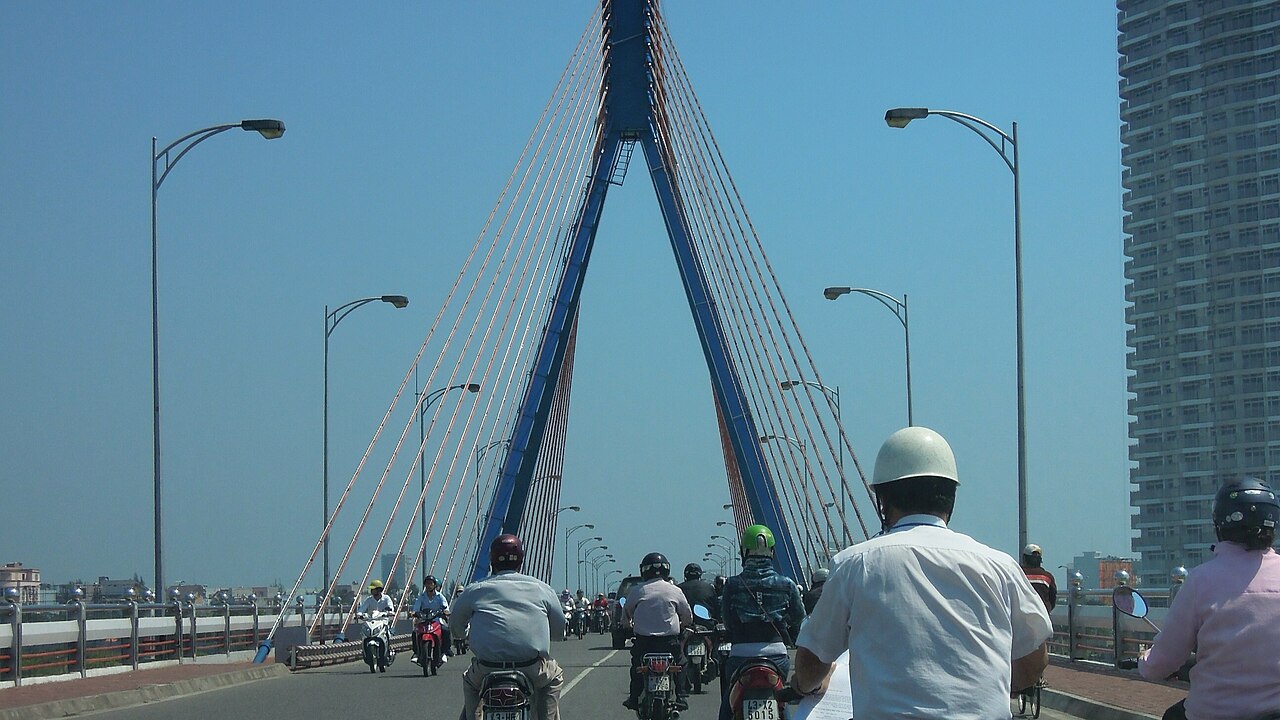
Beyond these, provincial cities such as Hai Phong, Can Tho, Vinh and Quy Nhon hire steadily and pay surprisingly well against their cost of living. You will have fewer foreign colleagues and need more patience with the language, but the savings can be considerably better.
The job market right now
Here is the shape of the Vietnam market as it stands on this board in August 2026, by employer type:
The practical takeaway: half the market is language centres, so that is where a first-time teacher should aim. International schools are a real quarter of the board, but they are also where the qualification bar jumps — most want a PGCE, QTS, state licence or equivalent alongside classroom experience.
School types
Private language centres teach English as an after-school extra. Classes are in the evening and at weekends, groups are lively and often large, and the curriculum is handed to you. Contracts are typically hourly or a guaranteed-hours package. This is the fastest route in and the easiest place to build experience.
Bilingual and international schools follow a full curriculum — IB, Cambridge, or an American programme — with weekday daytime hours, school holidays and the highest salaries. They want licensed teachers and will check your credentials properly.
Kindergartens teach English to two- to six-year-olds through songs, games and routine. Daytime hours, no marking to speak of, and a job that rewards energy and patience far more than academic knowledge.
Public schools place foreign teachers into state classrooms, usually through an agency. Class sizes are big — forty students is normal — and resources are thinner, but the hours are civilised and the work is meaningful.
Universities and corporate training teach adults: exam preparation, business English, and academic skills. Fewer roles, often part-time, but the pay per hour is the best in the market and the classroom management is easy.
Benefits and perks
Beyond salary, the package is where offers really differ. Common inclusions:
- Work permit and visa sponsorship, with the school paying the government fees and handling the filing — treat this as non-negotiable.
- Housing allowance or provided accommodation, more common at international schools and in smaller cities than at city-centre centres.
- Flight reimbursement, usually paid on completing a full contract year.
- Health insurance, mandatory on a proper labour contract and often topped up with private cover at better schools.
- Paid holidays and public holidays — Vietnam has a long Tet break, and international schools follow a full academic calendar.
- Contract-completion bonus, typically a month’s salary.
- Training and development, including sponsored CELTA or DELTA at some of the larger chains.
Challenges to expect
An honest guide has to cover the friction too.
- Paperwork takes longer than you think. Legalising a degree and police check across two countries routinely takes six to eight weeks. Start before you fly.
- Split shifts and weekend work. Centre teaching happens when students are free, which means evenings and Saturdays. It is the single biggest lifestyle adjustment.
- Large, mixed-ability classes. Thirty-plus students at very different levels in one room is normal, particularly in public schools.
- Employer quality varies a lot. The market has excellent schools and some that pay late, over-promise hours or dodge the work permit. Check reviews, talk to current teachers, and never accept a verbal-only offer.
- Traffic and air quality. Motorbike traffic is intense and both major cities have seasonal pollution problems.
- Language and admin. Banking, tenancy and immigration paperwork all run in Vietnamese, and outside teaching circles English is not widely spoken.
Hiring season
The Vietnamese academic year runs from August to May, with a long break for Tet. That shapes the calendar:
- June to August is the main window, hiring for a September start. Schools with fixed terms — international, bilingual, public — do most of their recruiting here. Apply in June and have your documents legalised by early August.
- December to January is the second wave, filling second-semester vacancies and roles left by teachers who did not return after Tet.
- All year round for language centres. New intakes open most months, so a strong candidate can start almost any time.
If you are aiming at an international school, work backwards further still: those posts are often filled six to nine months ahead, so a September start can mean interviewing in January or February.
How to find a job
- Get the paperwork moving first. Degree and criminal record check, apostilled and ready. Candidates who can start the permit immediately get picked over candidates who cannot.
- Finish a 120-hour TEFL if you do not already hold one. It is a legal requirement, not a nice-to-have.
- Write a CV for this market. One page, photo at the top, nationality and qualifications visible immediately. Our guide to writing a good teaching CV covers the format Vietnamese employers expect.
- Apply to a lot of roles at once. Response rates are high but inconsistent; ten applications is a normal week.
- Research the employer before interviewing. Ask directly who pays the work permit fees, how hours are guaranteed, and whether the salary quoted is gross or net.
- Prepare for a demo lesson. Most centres will ask for a short teaching demonstration, live or recorded. Our interview tips for teaching jobs in Vietnam go into what schools look for.
- Get the offer in writing before you resign, book flights or ship anything.
Latest jobs in Vietnam
Live vacancies from schools and centres hiring right now:
FAQ
Can I teach English in Vietnam without a degree?
Not legally. A bachelor’s degree is a statutory condition of the work permit, and without a permit you cannot be employed lawfully. Any school suggesting otherwise is proposing that you work illegally, and the consequences — fines, deportation, a re-entry ban — fall on you.
Do I need to be a native English speaker?
No. Nationality is not written into the work permit rules. In practice many employers advertise for native speakers and pay them more, but well-qualified non-native teachers with a C2 certificate and solid experience are hired regularly, especially by international schools.
How much can I realistically save each month?
On the median salary of 45 million VND against a comfortable budget of around US$1,000–1,200, saving 30–50% of your income is a realistic target in Hanoi or Ho Chi Minh City — and more in a smaller city.
Is it better to apply from home or after arriving?
Both work. Applying from home is safer and lets you negotiate a flight allowance, and video interviews are standard. Arriving first gives you access to in-person demo lessons and roles that need someone immediately — but bring enough savings to cover two months while things settle.
How long does the work permit take?
Once your legalised documents and medical check are in hand, employers typically complete the filing in two to four weeks. The slow part is legalisation beforehand, not the permit itself.
Can my partner or family come with me?
Yes. A Temporary Residence Card holder can sponsor dependants, and both major cities have international schools — though tuition is the one expense that can genuinely outweigh a teaching salary, so check the fees before committing.
Related guides
- Teaching English in Thailand: The Complete 2026 Guide
- 8 steps to start a new English teaching job in Vietnam
- How to make a good CV for an English teaching job
- 11 tips for a standard recruitment interview in Vietnam
- Which countries are considered native English-speaking?
- 6 things to do when starting a new teaching job in Vietnam
- Browse all English teaching jobs in Vietnam →
Salary and job-market figures in this guide were compiled from the 56 Vietnam vacancies live on Asia TEFL Job in August 2026. Currency conversions use a rate of approximately 26,000 VND to US$1. Visa and work-permit details reflect Decree 219/2025/ND-CP, in force since 7 August 2025. Immigration rules change — always confirm current requirements with your employer or the Vietnamese authorities before making plans. Primary sources: evisa.gov.vn, Vietnam Immigration, vanban.chinhphu.vn; cost-of-living cross-check from Numbeo.